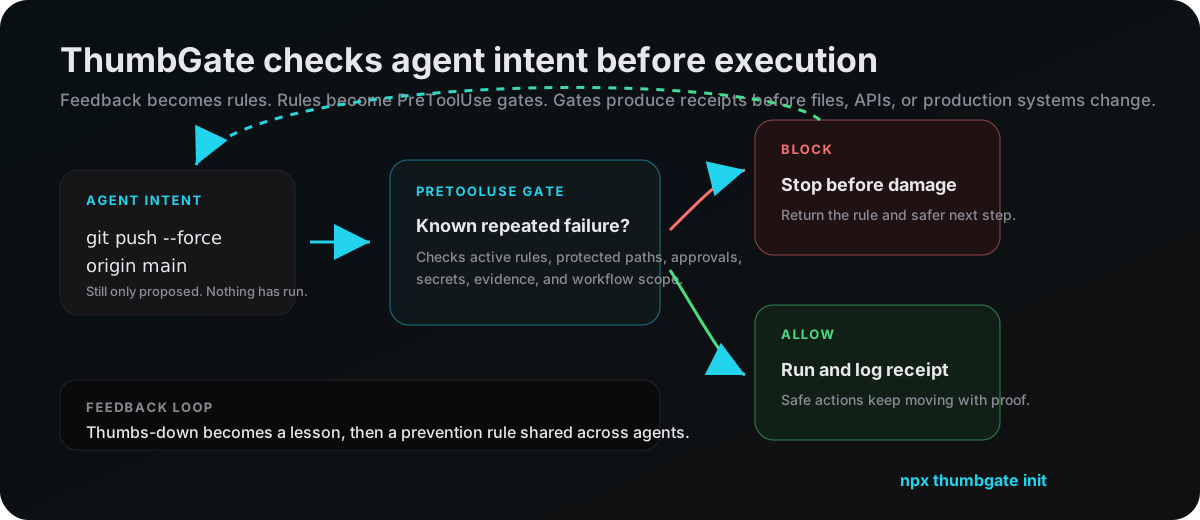
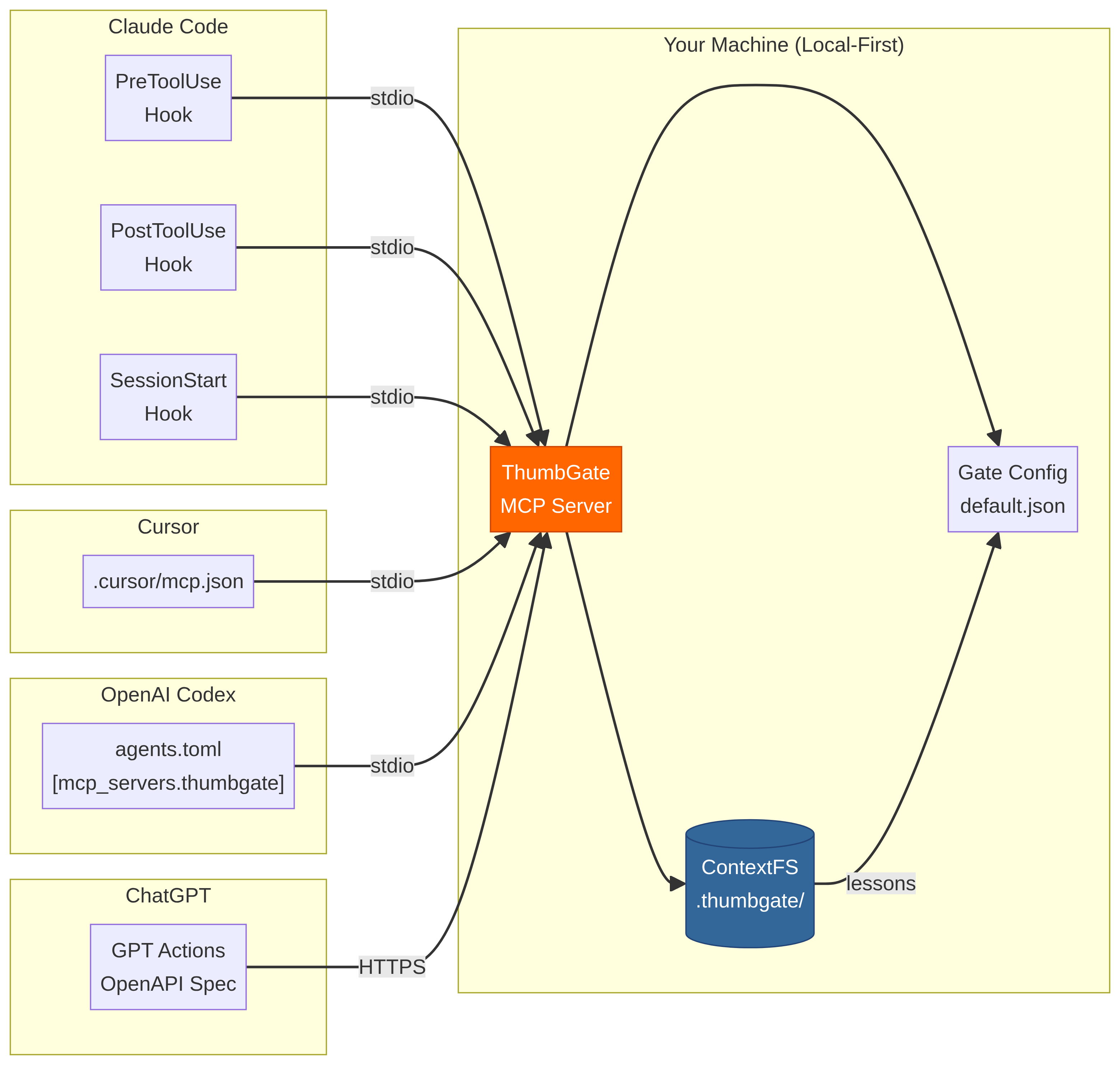
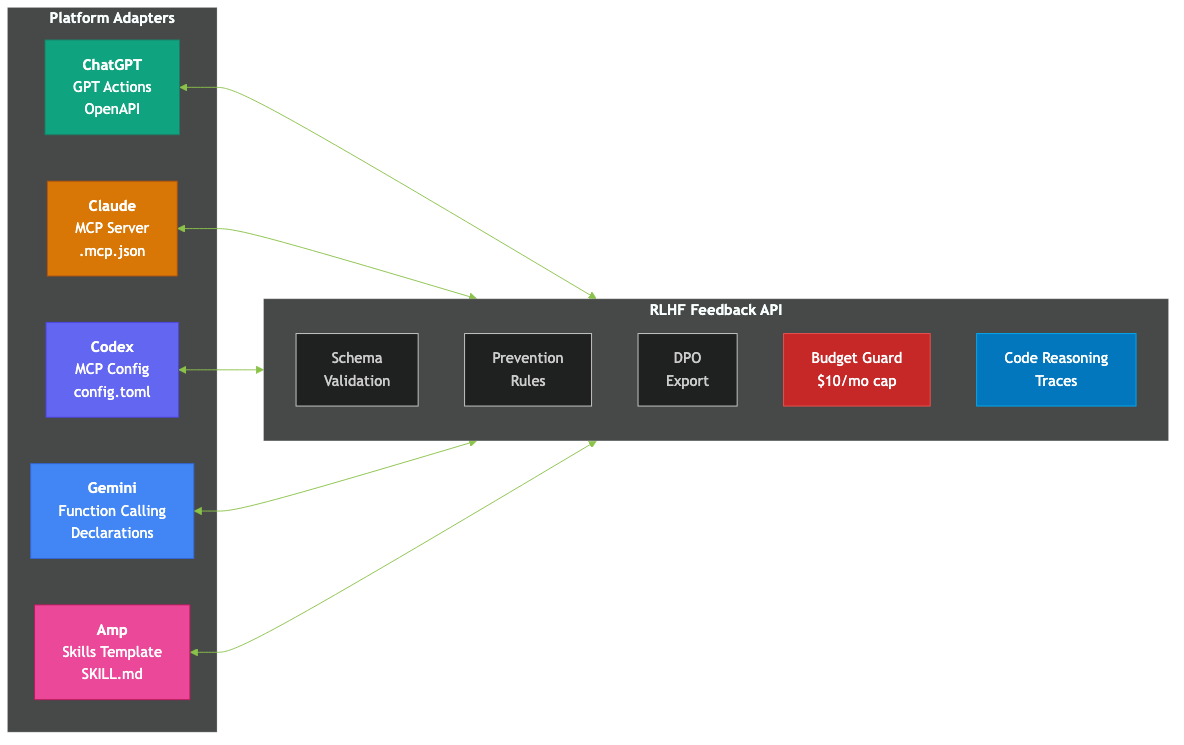
Architecture diagrams

The same system diagrams that ship in the open-source README, published here so buyers and reviewers do not need GitHub to see how PreToolUse enforcement, feedback, and promotion fit together.

Local-first enforcement

No LLM on the block/allow path. Deterministic rules first; local semantic recall only when needed.

Feedback → rules

Thumbs-down becomes a reviewable lesson, then a prevention rule that fires before the next tool call.

Multi-agent surface

One gate layer across Claude Code, Cursor, Codex, Gemini, Amp, Cline, OpenCode, and MCP.

System architecture
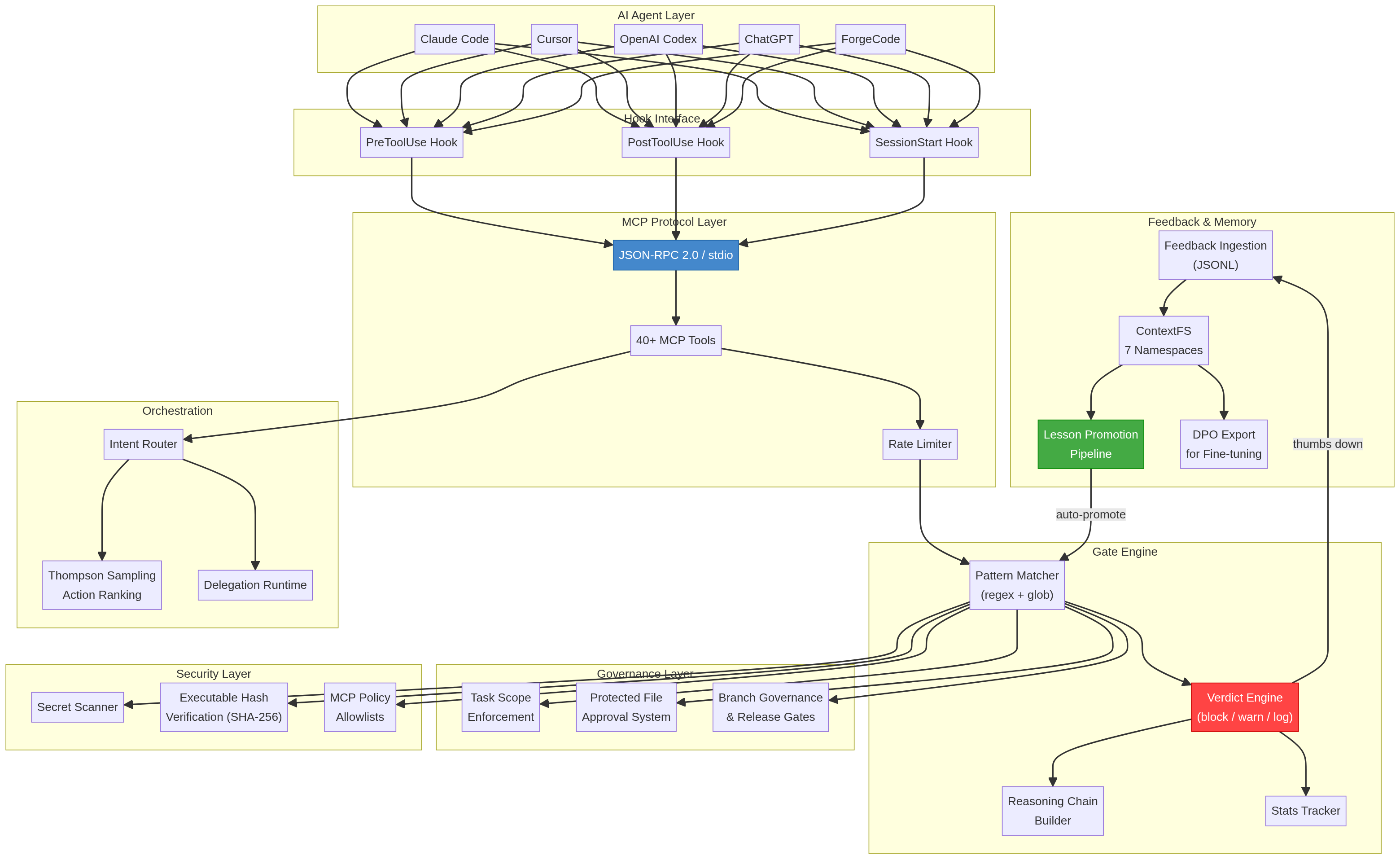
ThumbGate architecture: agent layer, hooks, MCP tools, gate engine, governance, security, feedback memory, and orchestration
Agents → hooks → MCP tools → gate engine (match / verdict / reasoning / stats), with governance, secret scanning, feedback promotion, and orchestration around the decision path.

Feedback pipeline (session 1 → session 2)
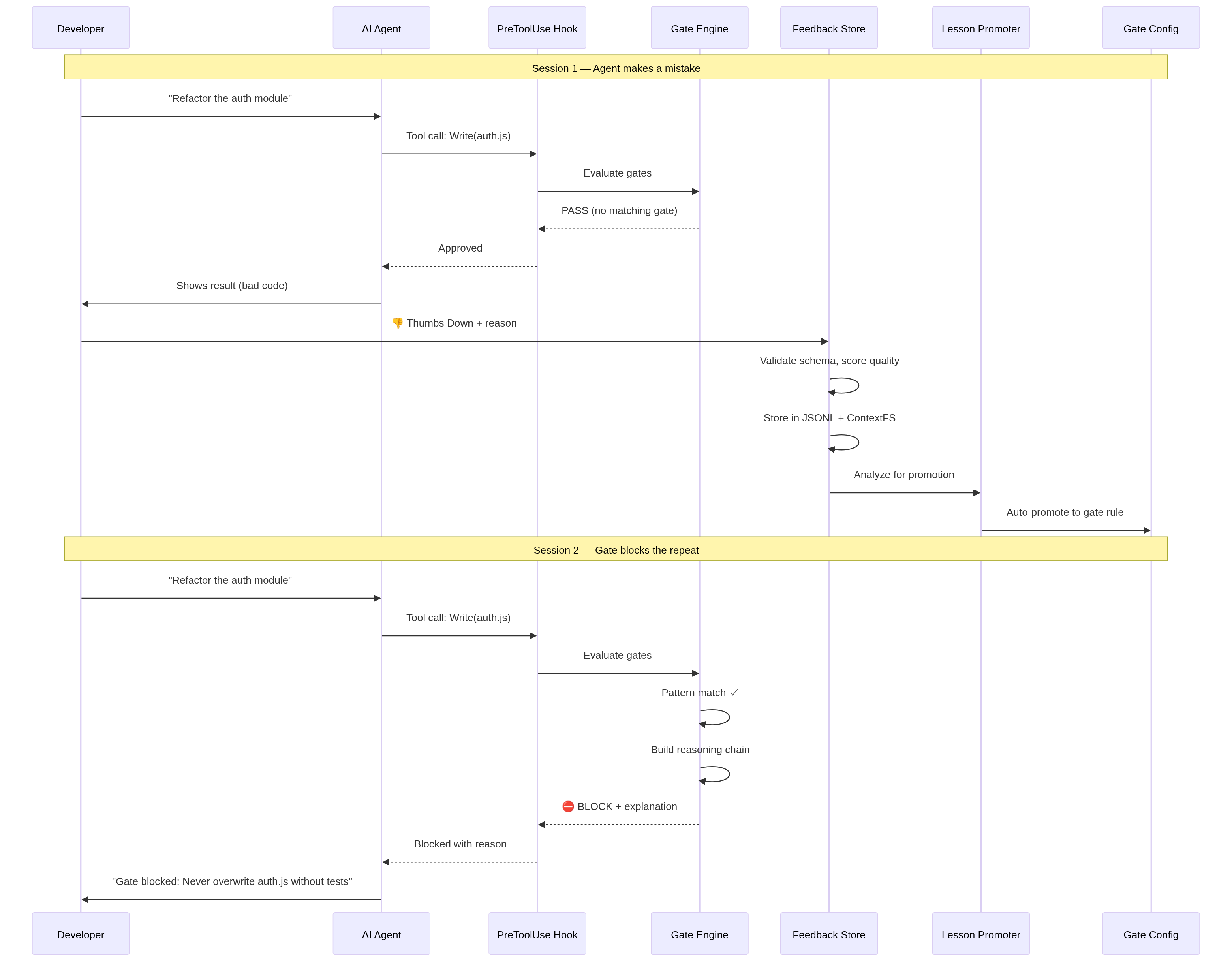
Sequence diagram: agent mistake, thumbs-down capture, rule promotion, next session blocked
Session 1 captures a thumbs-down; the lesson is promoted; session 2 blocks the repeat before execution.

Pre-action gate loop

Pre-action gate loop: capture, remember, rank, gate
Capture feedback → remember locally → rank and promote → gate the next tool call.

Agent integration

ThumbGate agent integration map across coding agents and MCP
How ThumbGate attaches to coding agents and MCP tool surfaces without putting a remote model on the enforcement path.

Plugin topology

ThumbGate plugin topology across IDE and CLI surfaces
Where plugins and marketplace packages sit relative to the local gate runtime.

Related proof surfaces

How we know it works Eval scorecard Mermaid sources on GitHub →